
Water Filtration for Camping, Hiking and Overland Travel
On trail the decision is weight against effort: a straw you drink through directly costs 90 g and no pumping, while a gravity or pump system trades weight for the ability to fill a bottle hands-free. What both need is a stated capacity so you know when the element is spent rather than guessing from taste.
Filters fail on trail in two ways: they clog because the source was silty, or they are used far past their rated volume and the flow drops to a trickle. Both are manageable if the rating is printed on the device and the user knows how to backflush it at camp.
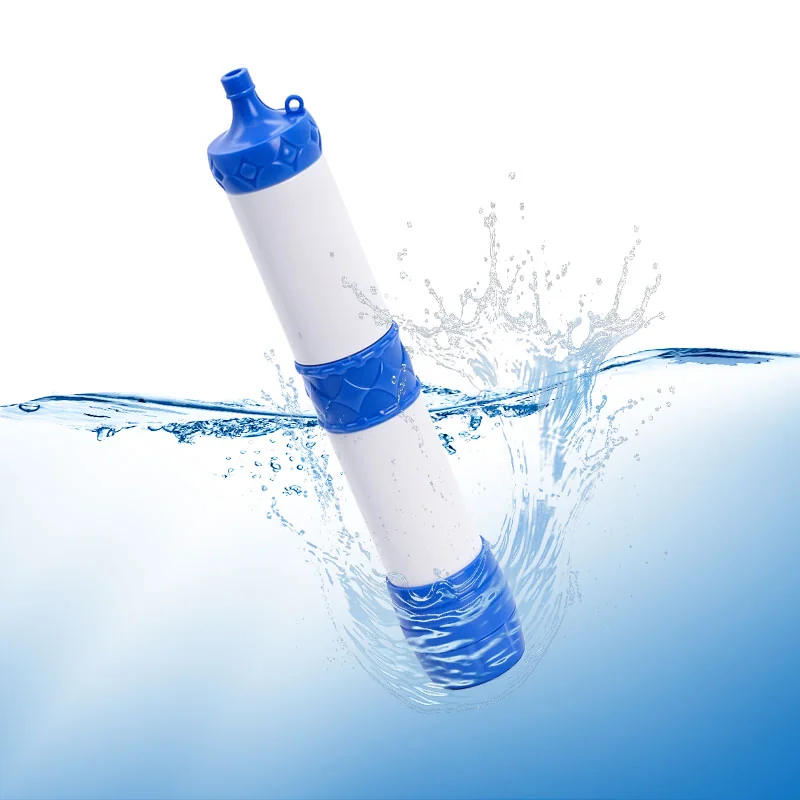
Straw, bottle or gravity?
A straw (O-A7) suits drinking directly from a source or a soft flask and weighs 90 g. A filtered bottle (O-B4, 3,000 L rated) suits camp where you want water carried ready to drink. A pouch (O-B1, 300 L) is the lightest option for a short trip where weight dominates.
How do I keep flow up on silty water?
Pre-settle the water, draw from above the sediment, and backflush at the end of each day rather than when flow collapses. Silt is mechanical: it blinds the surface, and a backflush restores most of the flow before it becomes permanent.
When is a filter not enough?
Where the hazard is chemical - agricultural runoff, mining drainage, salt - a hollow fibre element does not help, because dissolved contaminants pass through. In those places the answer is a different source, not a tighter filter.
Typical configuration
O-A7 High-Flow Outdoor Filter Straw
High-flow variant of the survival straw with a 304 stainless steel stage added to ABS, silica gel, hollow fiber UF and PP cotton. At least 400 ml/min — a third more flow than O-A6 at 90 g.
at least 1,000 L · Over 400 ml/min, 90 g
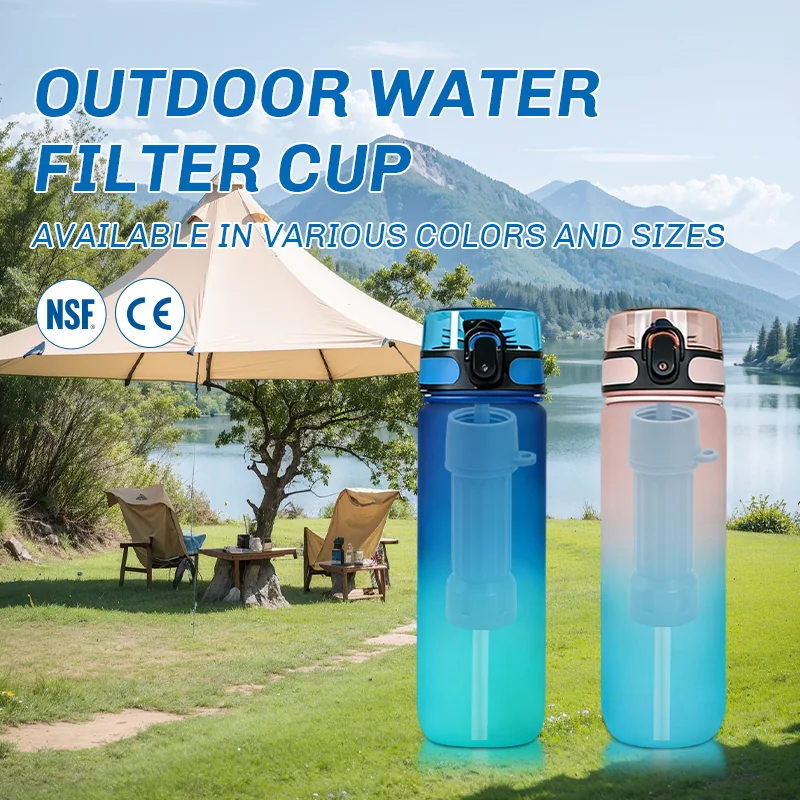
O-B4 Outdoor Filtered Sports Bottle
Sports bottle with an integrated filter straw in 600 / 750 / 1000 ml: PC + PP + activated carbon + PP + UF, rated 3000 L and 200 ml/min, 172–200 g.
3,000 L · 600 / 750 / 1,000 ml options
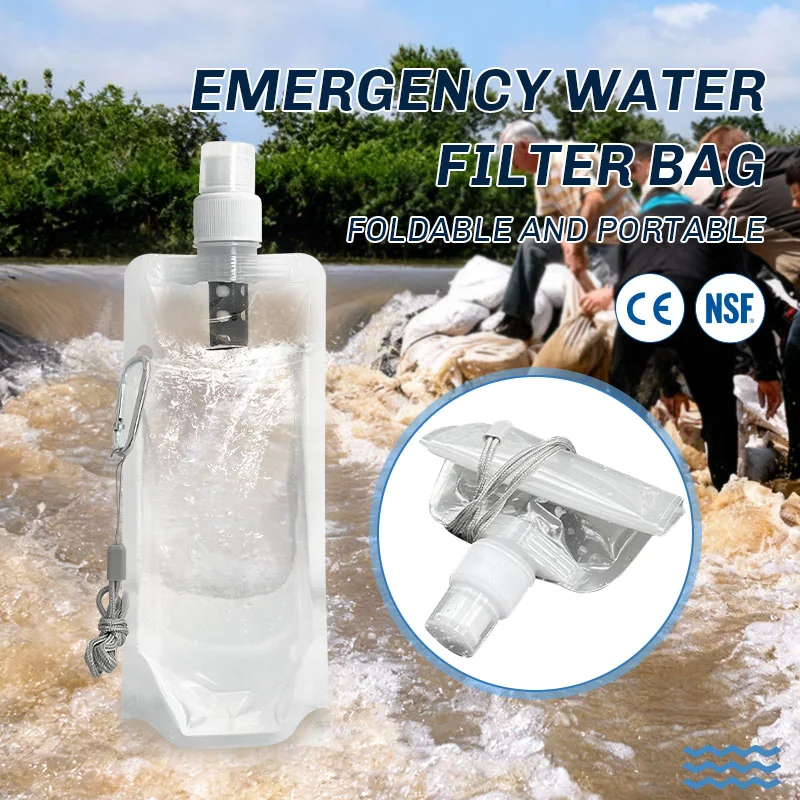
O-B1 Outdoor Water Filter Pouch
Gravity and squeeze filter pouch built around a hollow fiber UF cartridge: 300 L lifespan at 150 ml/min, and 35 g dry. Rolls flat when empty.
300 L · 35 g
Frequently asked questions
How many litres will one element treat?
At least 1,000 L for O-A7, 3,000 L for O-B4 and 300 L for O-B1, as stated on each spec sheet. Track it - a filter does not fail visibly, it just slows down.
Does it remove the taste of chlorine from tap water?
The outdoor range is built for biological and particulate risk. For taste, a carbon stage is the right tool, which is why the household models combine carbon with UF.
Can it freeze?
A wet element that freezes can crack. Drain and shake it out before a freezing night, or carry it inside the sleeping bag.
Work out the numbers
Tell us trip length, group size and source type - we will size a straw, bottle or pouch combination.