
Applications
Where 0.01 micron hollow-fiber ultrafiltration earns its keep - from protecting RO membranes and polishing aged spirits to pocket straws and two-layer drinking water systems. Each guide states what the membrane does, what it does not do, and which models fit the duty.
Not sure which grade? Try the flux sizing calculator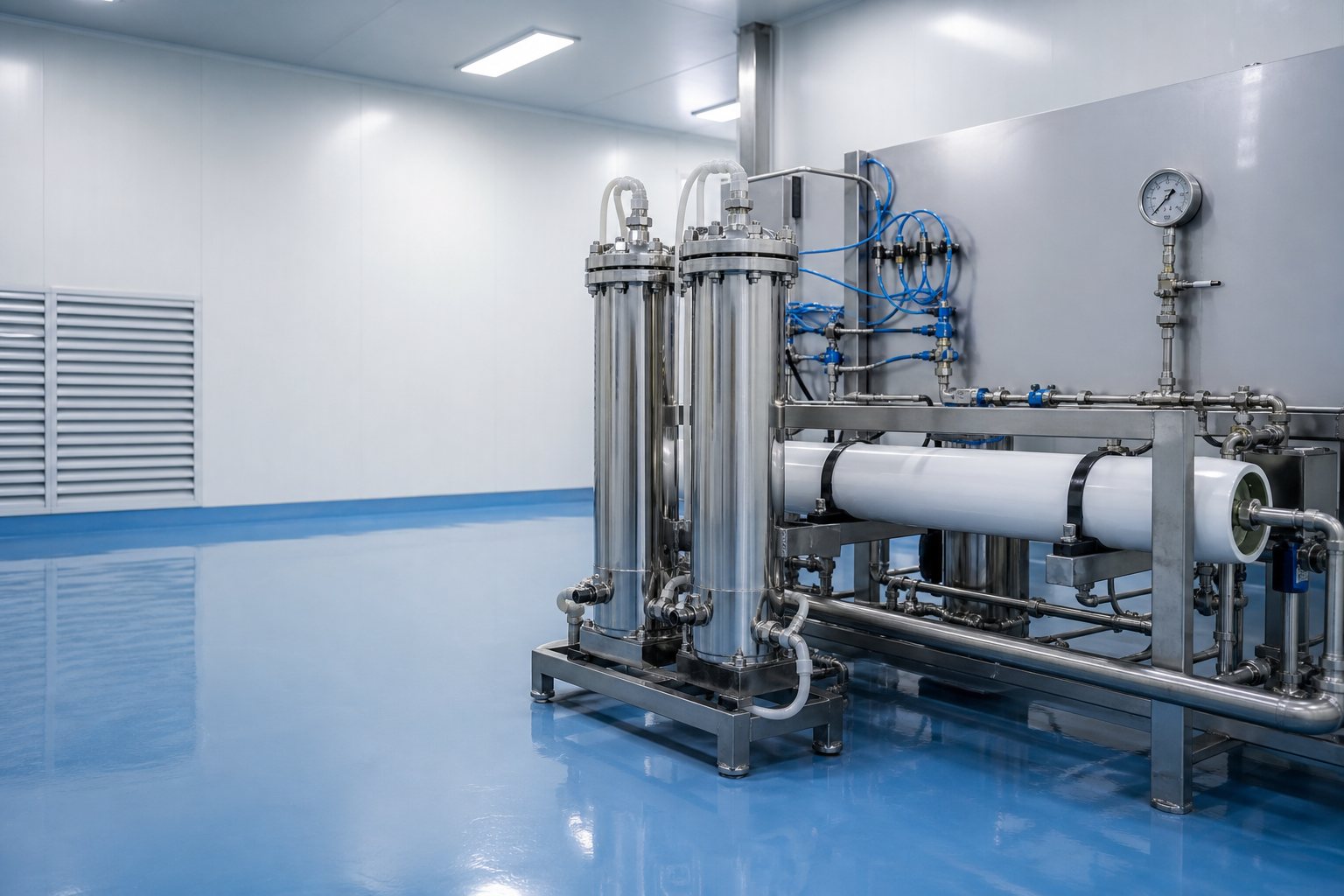
RO Pre-Treatment
How 0.01-micron PVDF ultrafiltration protects RO membranes: SDI control, published life-cycle data, washable stainless modules from 3,000 to 10,000 L/h, and a dual-module backwash arrangement.
Read the guide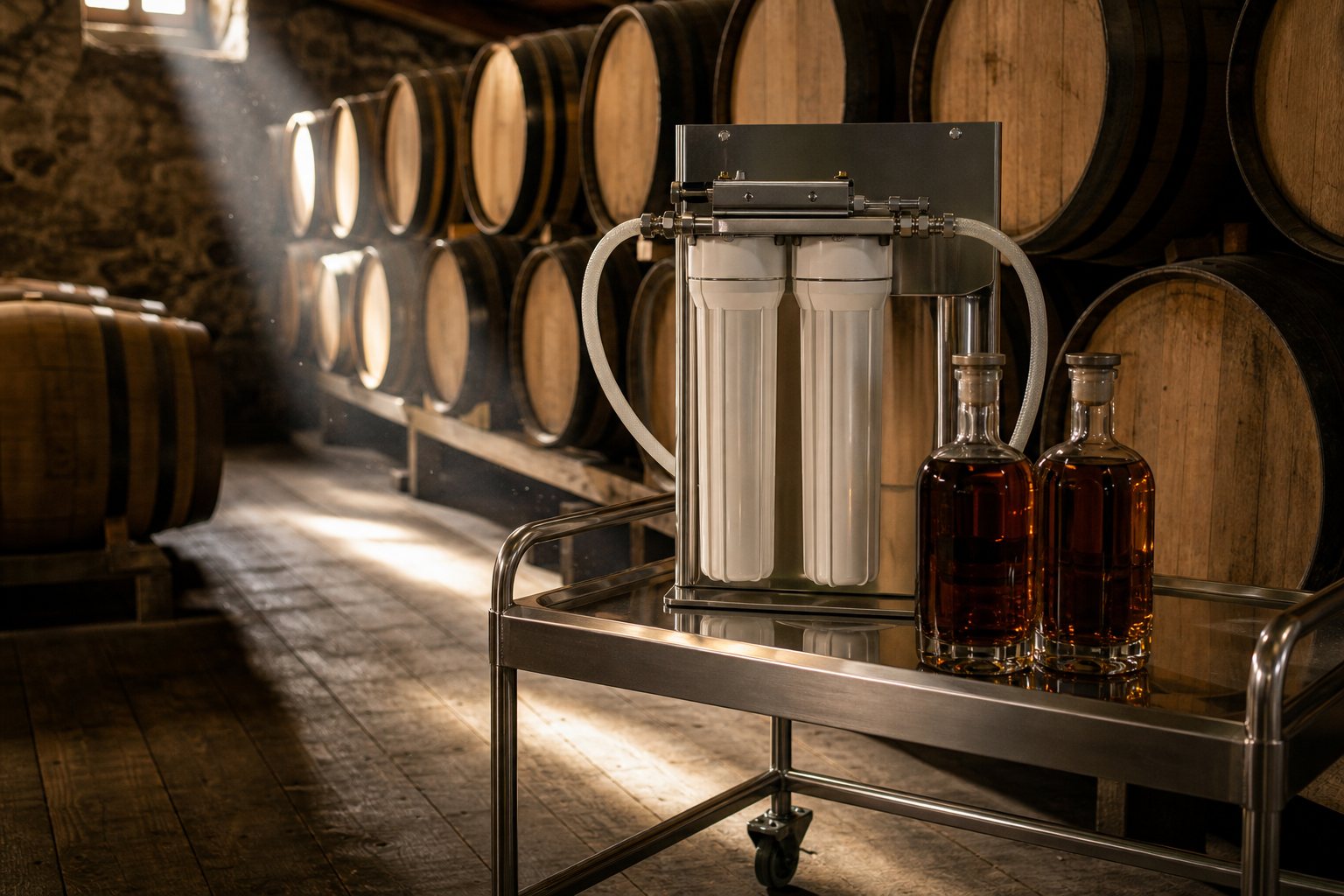
Beverage & Spirits
NSF-listed 10-inch hollow-fiber UF cartridges installed in distillery and brewery filtration housings - polishing aged brandy for clarity and mouthfeel, protecting bottling water, cold filtration duty without pasteurization heat.
Read the guide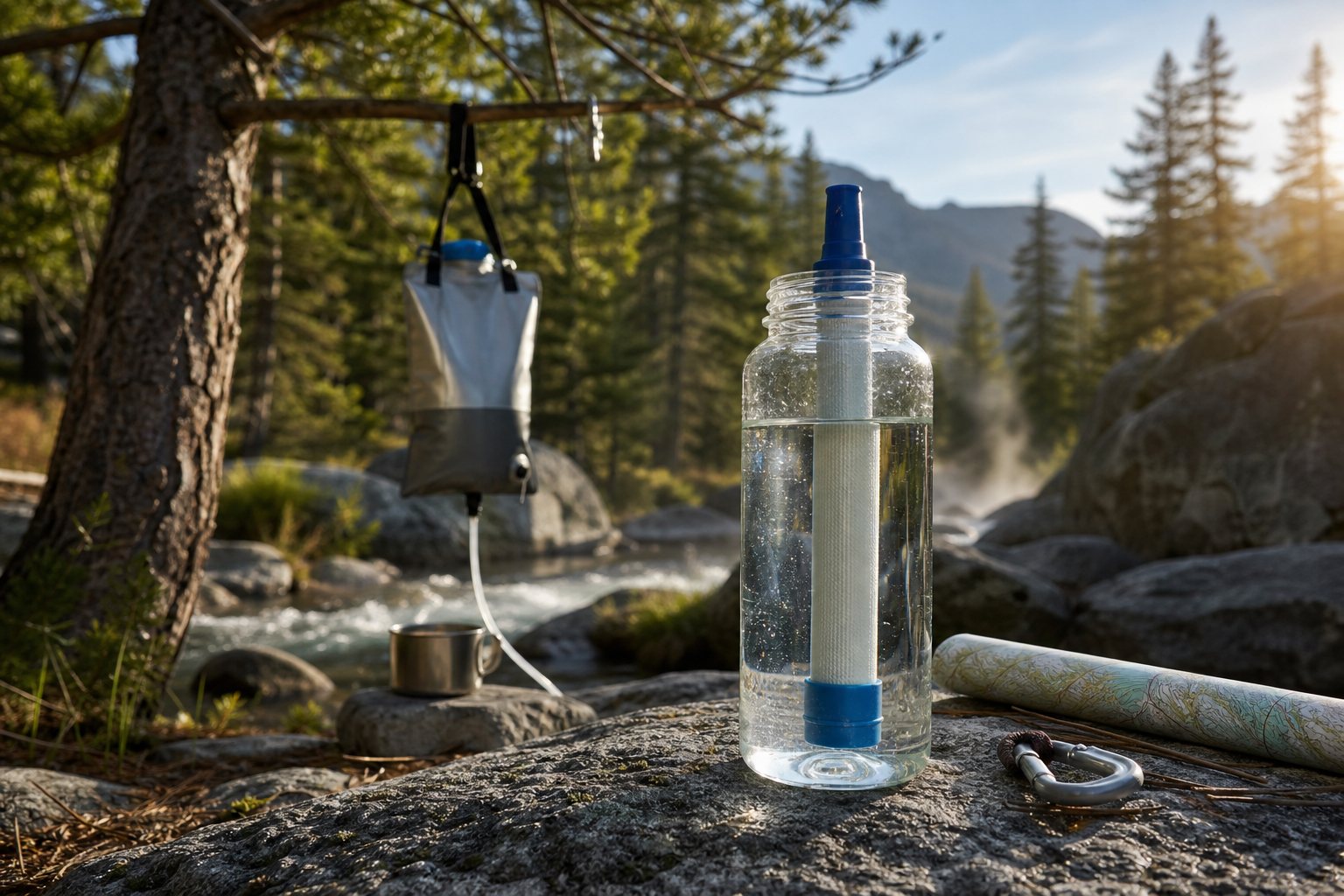
Outdoor & Emergency
NSF/CE-listed portable water filter straws (120 L/h, about 1,500 L element life) and gravity ultrafiltration - 0.01 micron hollow fiber that works at the stream, the tap or the bucket with water weight alone.
Read the guide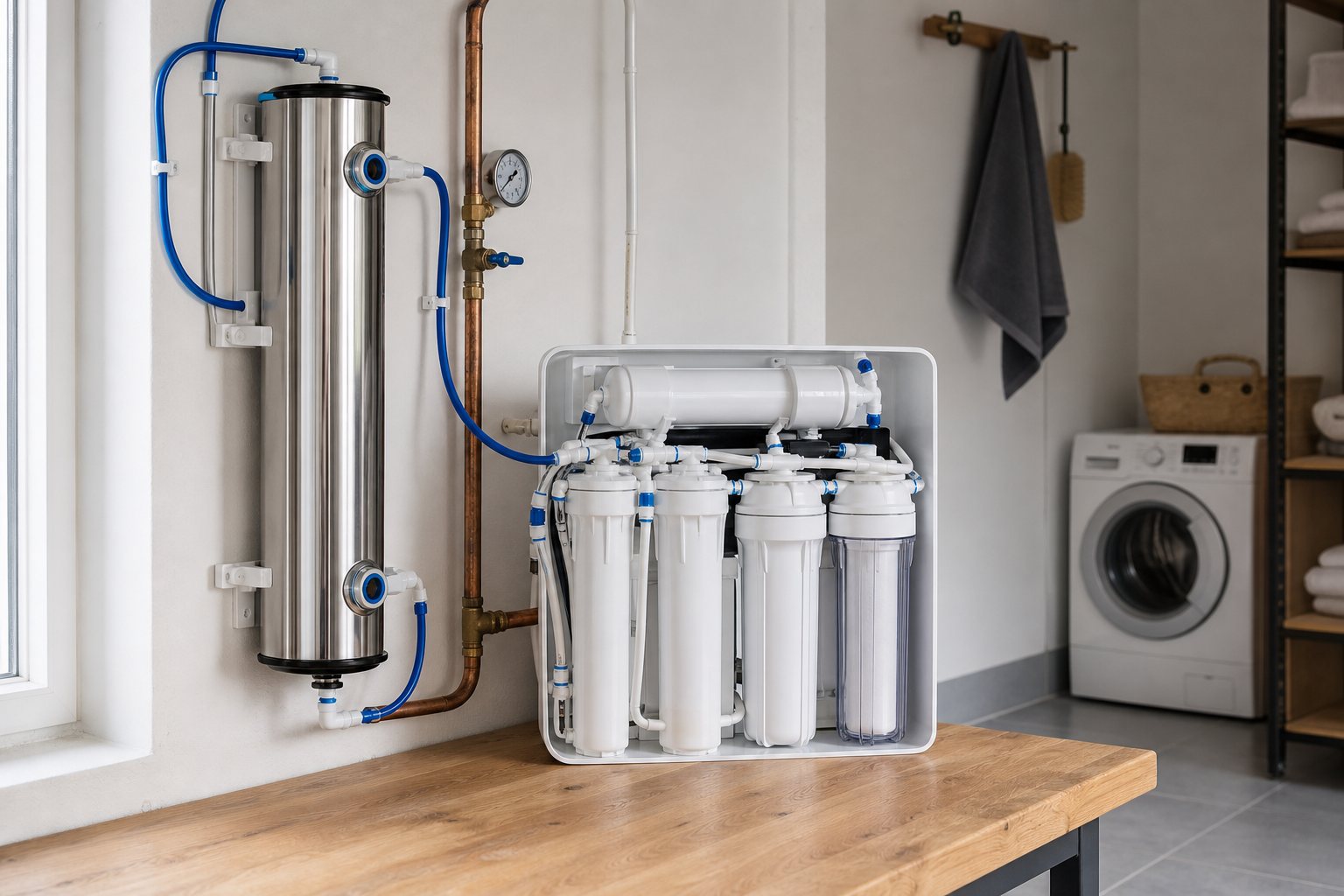
Drinking Water
Whole-house stainless UF (3,000-10,000 L/h from 0.1 MPa mains pressure), under-sink 5-stage RO at 100 GPD and quick-connect cartridges for residential and hospitality drinking water. The NSF/ANSI 42 certificate and the 372 lead-content report cover the ultrafiltration membrane, not the RO stage.
Read the guide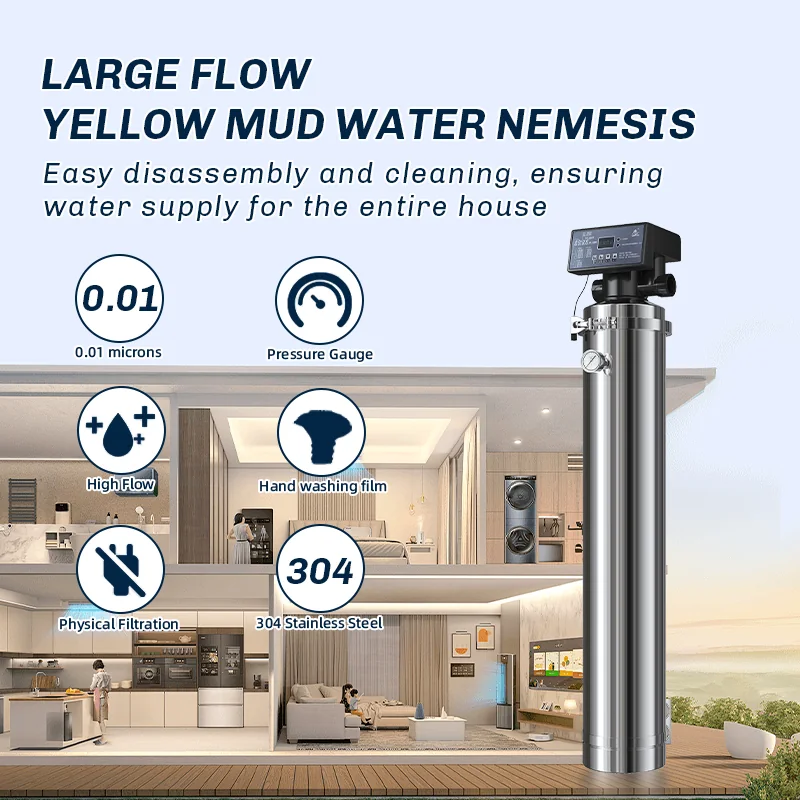
Hotels & Resorts
Why hotels put one central ultrafiltration unit ahead of the building: turbidity and bacteria control for guest rooms, kitchens and laundry, sized from 2,000 to 20,000 L/h with washable stainless modules.
Read the guide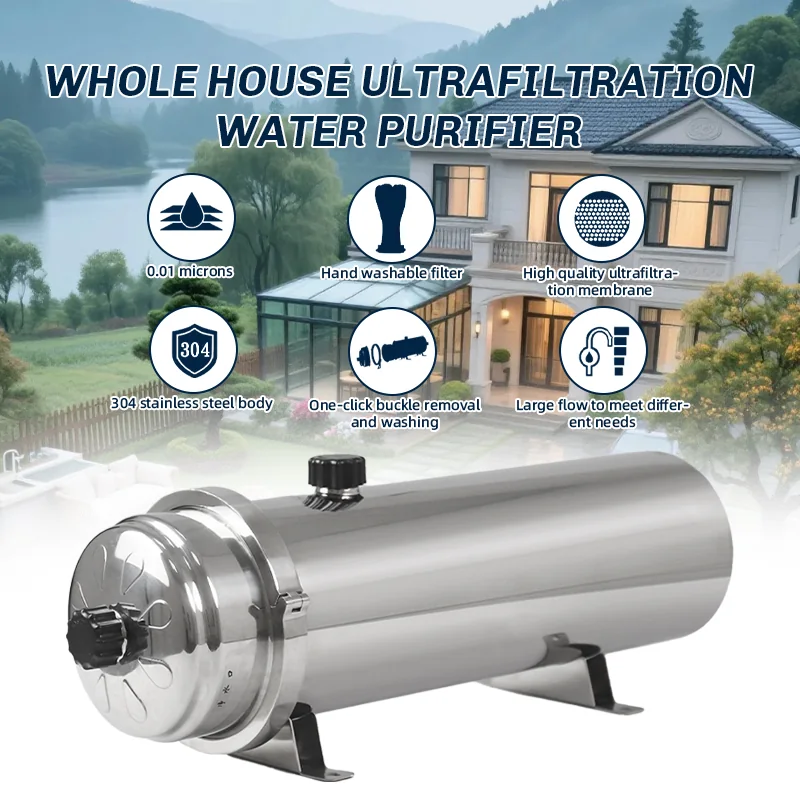
Bottling Plants
Ultrafiltration as the particle and bacteria barrier before ozonation, UV or filling: 0.01 micron hollow fibre in 304 stainless, 3,000 to 10,000 L/h, washable and CIP-tolerant.
Read the guide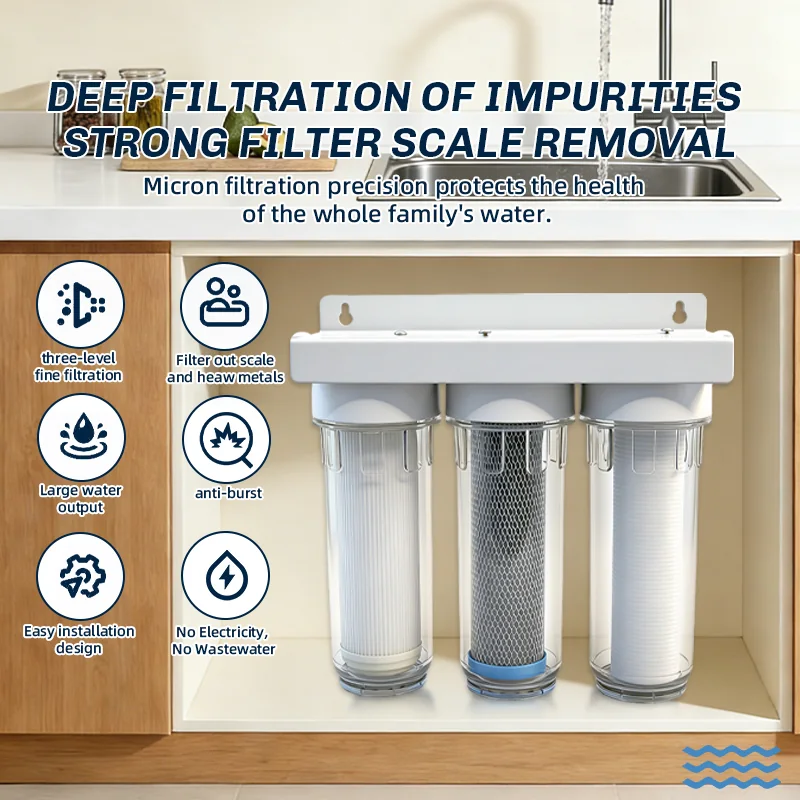
Coffee Shops & Cafés
Chlorine, particles and scale are the three things that ruin espresso. How a three-stage UF system under the counter protects boilers and group heads, and where a softener is still required.
Read the guide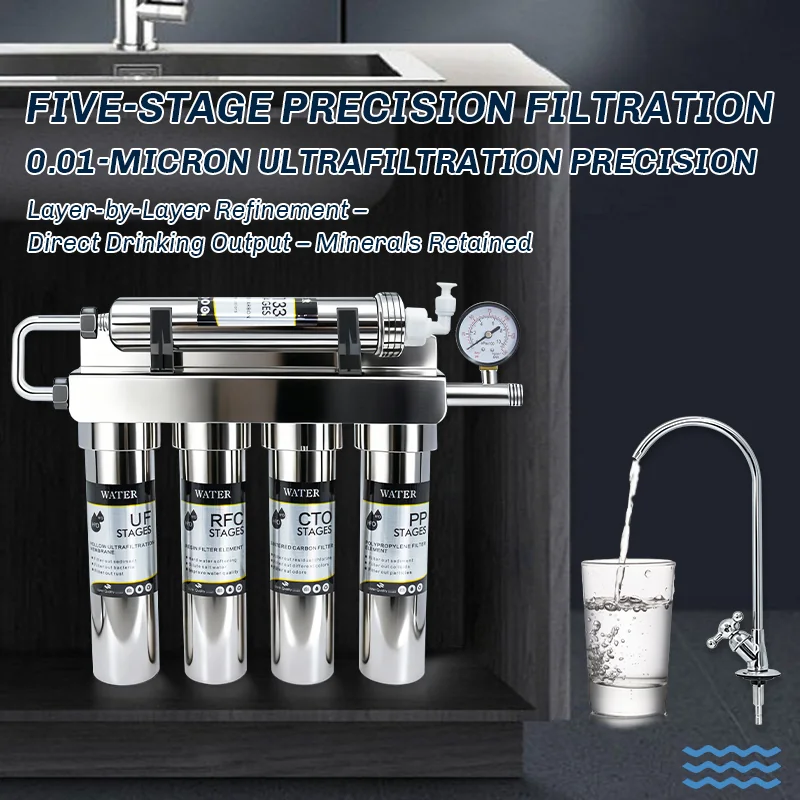
Restaurants & Ice
Cloudy ice, chlorine taint and scaled steamers trace back to the incoming water. Five-stage UF with carbon at 220 L/h for kitchens, plus what has to be added for hardness.
Read the guideHospitals & Clinics
Where 0.01 micron ultrafiltration fits in a hospital water system: protecting sterilizers, dialysis pretreatment and general supply, and the boundary between filtration and disinfection.
Read the guideSchools & Campuses
Drinking fountains, canteens and boarding houses on one central ultrafiltration unit: 0.01 micron barrier, washable stainless housing, and a point-of-use layer where the run is long.
Read the guideApartment Buildings
One central ultrafiltration unit for a residential block: turbidity and sediment control after mains work, washable 304 stainless module, 3,000 to 10,000 L/h, no power at the membrane stage.
Read the guideWell & Bore Water
Bore water carries iron, manganese, sand and turbidity. What five-stage ultrafiltration removes, what it cannot, and why the pre-filter becomes the consumable on well water.
Read the guideRural Water Points
A 0.01 micron barrier for village and settlement supplies: works on gravity or line pressure from 0.1 MPa, washable element, no chemicals and no operator round for the filtration step.
Read the guide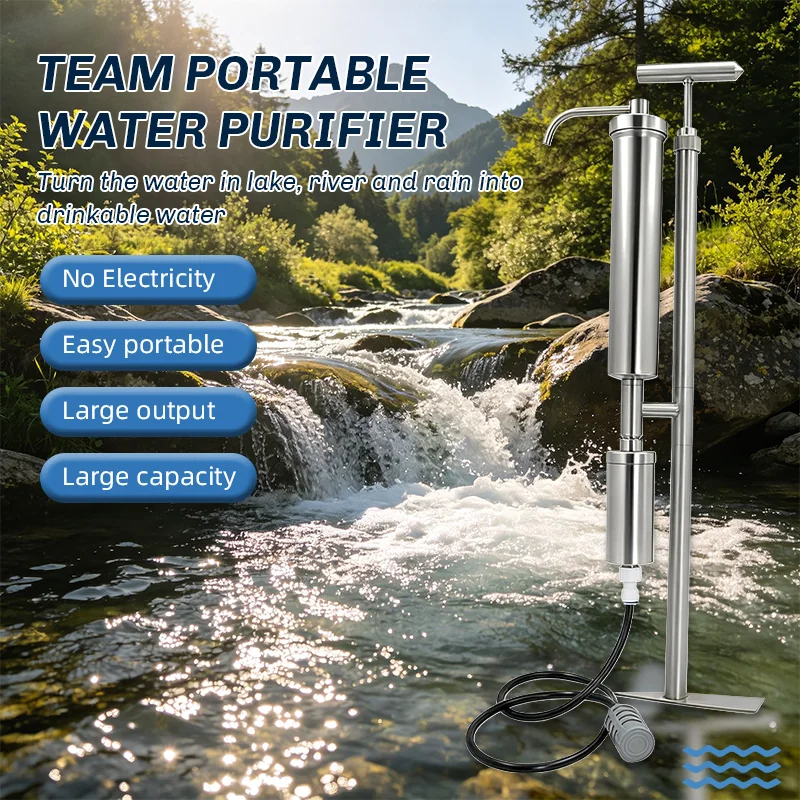
Disaster Relief
What relief operations need from a filter: no power, no chemicals, washable, and a stated capacity. Hand pumps rated to 3,000 L and stations rated over 10,000 L at 0.01 micron.
Read the guide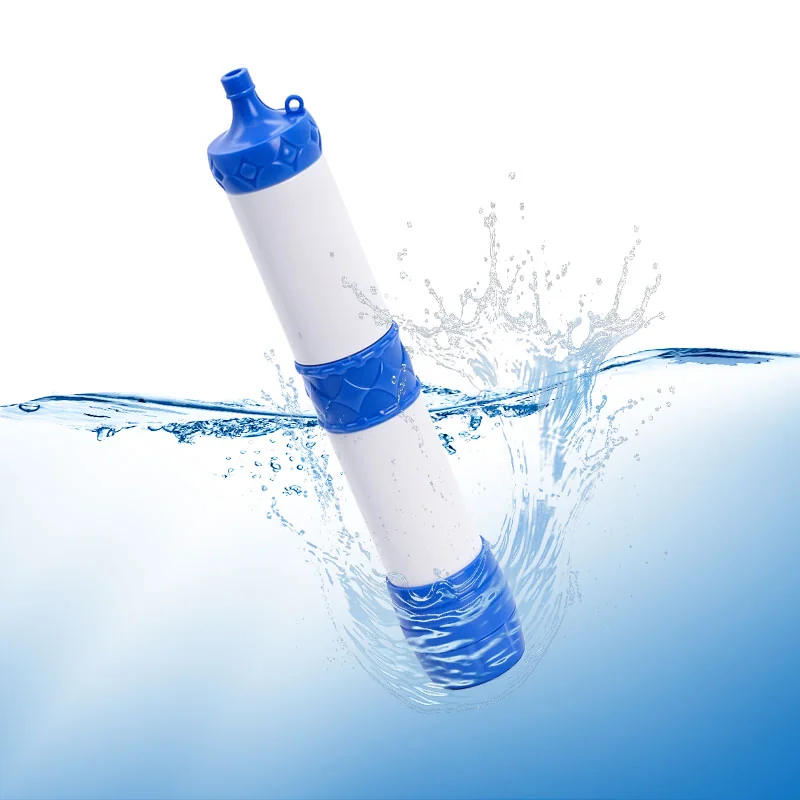
Camping & Hiking
Weight, flow and a stated capacity are the three numbers that matter on trail. O-A7 straw at 90 g and over 400 ml/min, O-B4 filtered bottle at 3,000 L, no pumping and no chemicals.
Read the guideMarine & Offshore
Protecting a watermaker from the particle load in harbour and coastal water: 0.01 micron stainless UF modules, washable elements, and what still has to be handled downstream.
Read the guide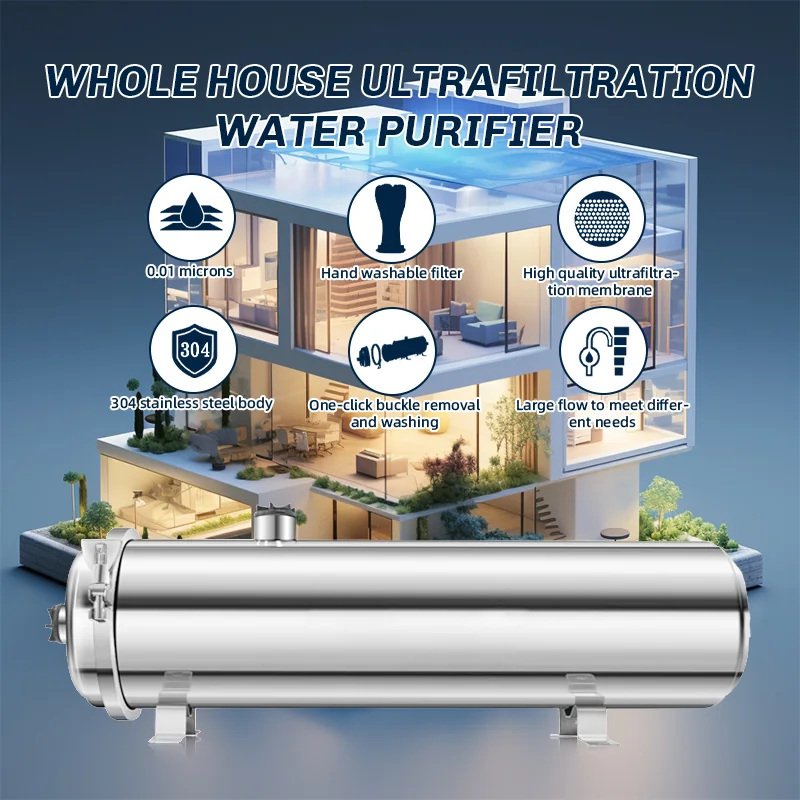
Aquaculture
Particle, turbidity and organism control in hatchery and pond make-up water at 0.01 micron, with a washable element and flows up to 20,000 L/h - and the chemistry it does not touch.
Read the guideGreenhouse & Irrigation
Organic matter, algae and fine silt are what block drip emitters. A 0.01 micron barrier ahead of the fertigation unit, plus the chemical problems UF cannot solve.
Read the guideFood Processing
Ingredient water, wash water and steam feed in food plants: a 0.01 micron barrier in 304 stainless, washable and CIP-tolerant, sized 3,000 to 20,000 L/h.
Read the guideTextile & Dyeing
Batch-to-batch shade variation often starts in the water. A 0.01 micron barrier at 3,000-20,000 L/h stabilises turbidity and particle load before dyeing and finishing.
Read the guide