
Ultrafiltration for Textile Processing and Dye House Water
Dye houses chase shade repeatability through dye selection and machine settings, but the water arriving at the vessel changes daily: turbidity after rain, sediment after mains work, organic load that consumes dye. A 0.01 micron barrier removes that variable, which is the one input the dye house can actually control.
When a batch comes out half a shade off, the investigation usually starts with the dye lot. It should start with the water, because that is the input nobody measured that morning. Stabilising particle load does not guarantee repeatability, but leaving it variable guarantees the opposite.
What does UF change for a dye house?
It removes suspended solids, turbidity and organism-sized particles that either deposit on fabric or consume dye auxiliaries. What it cannot change is hardness, alkalinity, salinity or dissolved metal content - all of which affect dye uptake and all of which need separate treatment.
Where should it be installed?
At the process water main, before the dye kitchen and the vessels, so every batch starts from the same baseline. If the plant reuses treated effluent, the UF stage also protects the reuse loop from the fines that survive biological treatment.
Does it help with effluent reuse?
It removes the particulate fraction that causes membrane fouling downstream and colour carry-over in the loop. Dissolved colour and salt still need the appropriate process step, so treat UF as one stage in a reuse train, not the whole train.
Typical configuration
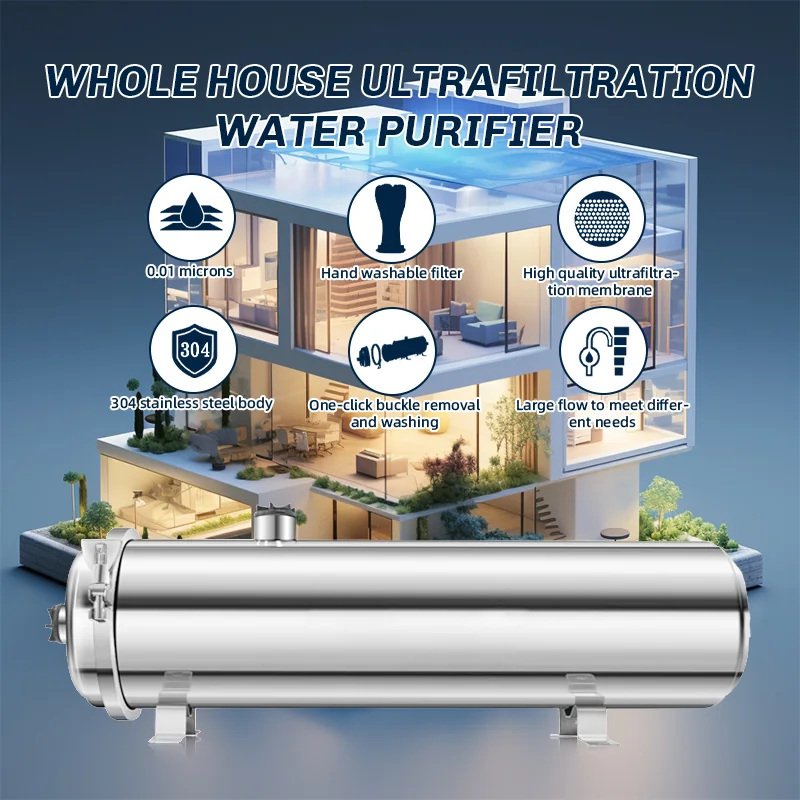
H-2 Whole-House / Commercial UF Water Purifier
Horizontal ultrafiltration purifier covering 1000 to 20000 L/h across three cylinder diameters (Φ102, Φ159, Φ203) for residential through commercial duty. Food-grade 304 stainless steel, PVDF or PVC membrane, 0.01 micron.
up to 20,000 L/h · Parallel banks for peak draw
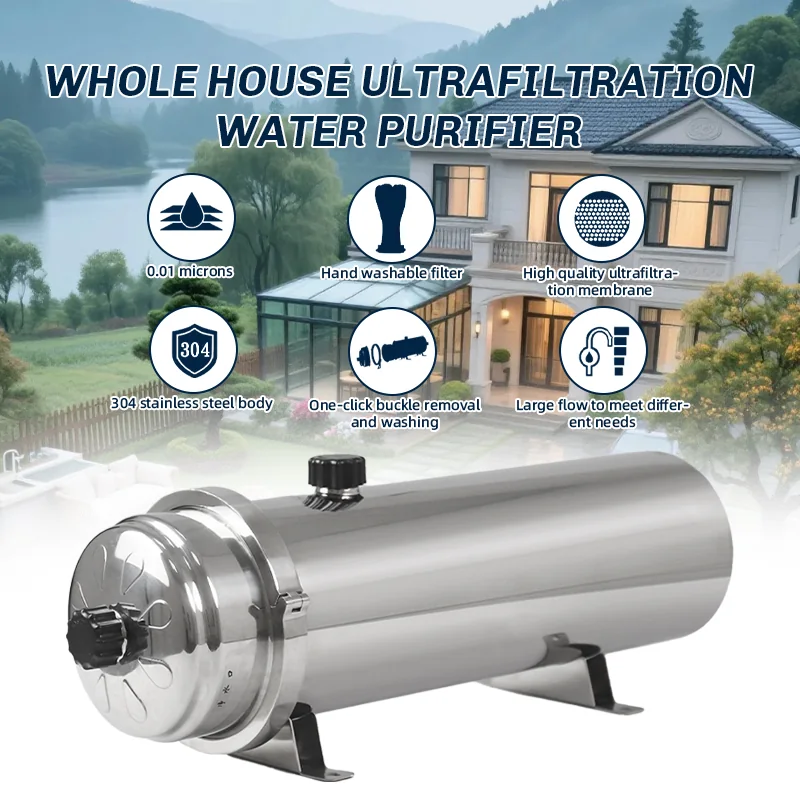
H-1 Whole-House UF Water Purifier
Horizontal whole-house ultrafiltration purifier in food-grade 304 stainless steel, with a uniform Φ168 mm cylinder and flow options from 3000 to 10000 L/h. PVDF or PVC membrane at 0.01 micron, no electricity required.
3,000-10,000 L/h · Stainless, washable
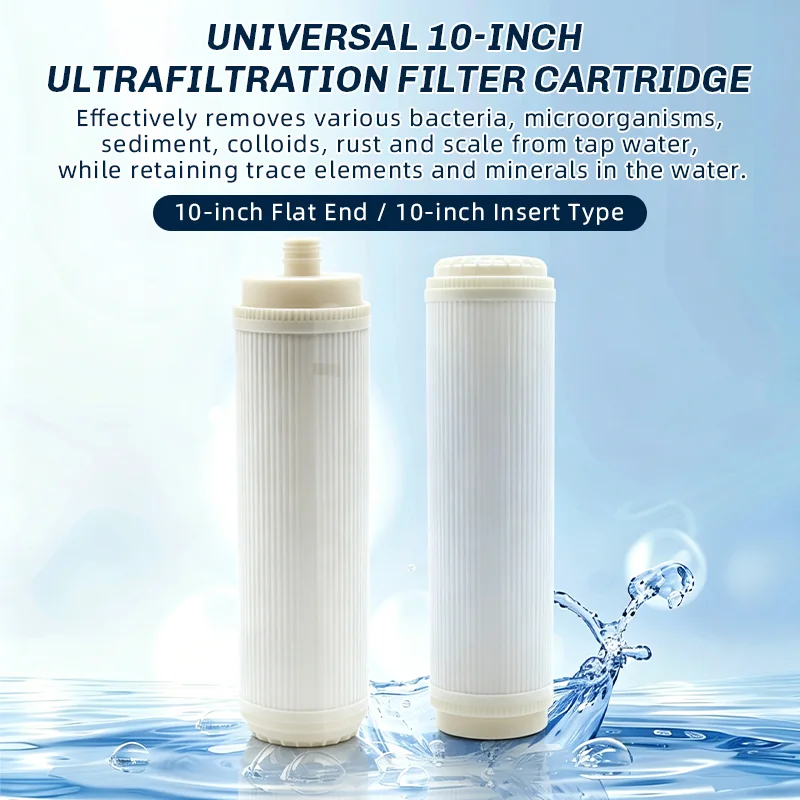
LX-A1 Universal 10-Inch UF Membrane Element
Universal 10-inch hollow fiber UF element, Φ70 × 254 mm, in PS, PVDF or PES at 0.01 micron. Fits standard 10-inch housings and replaces the cartridge in existing under-sink systems.
Standard housing · Guard ahead of the next stage
Frequently asked questions
Will filtration fix shade variation on its own?
No. It removes a variable, which makes every other variable easier to see. Hardness, alkalinity, salt and dye lot still need controlling.
Can it handle hot process water?
The elements are rated for the temperature range on their spec sheets; confirm the maximum against your process temperature before specifying, and never exceed it.
What maintenance does a dye house need to plan for?
Backwash on differential pressure and periodic element replacement. Because dye house water can be heavily loaded, plan the first few months as a monitoring period and set the interval from real readings.
Work out the numbers
Send flow rate, water source and process temperature - we will specify the module and the monitoring points.