
Ultrafiltration for Food and Beverage Process Water
In a food plant, water is an ingredient, a cleaning agent and a heat transfer medium, and each role tolerates a different level of particle load. A 0.01 micron stainless barrier gives all three a consistent feed, which is what makes a HACCP plan easier to defend than reacting to each batch result.
Most process water incidents are not dramatic: a turbidity spike after mains work, a filter breakthrough nobody noticed, a rinse step that leaves a film. Consistency is the product, and consistency is easier to evidence when the barrier is a physical membrane with a differential pressure gauge on it.
Which streams should be filtered?
Ingredient water and final rinse water first - those touch the product directly. Steam boiler feed and cooling make-up benefit too, mainly to protect exchangers. Wash water for produce is usually specified separately because its load is far higher and its quality requirement lower.
Is stainless necessary?
For product-contact streams, yes. H-1 and H-2 use 304 stainless housings specifically because plastic housings are hard to clean and hard to defend in an audit. The element itself is polymeric and is replaced on interval.
How does this fit an audit?
A physical barrier with a recorded differential pressure and a documented change interval is straightforward to evidence. What auditors push back on is a claim without a record - so keep the gauge readings, not just the certificates.
Typical configuration
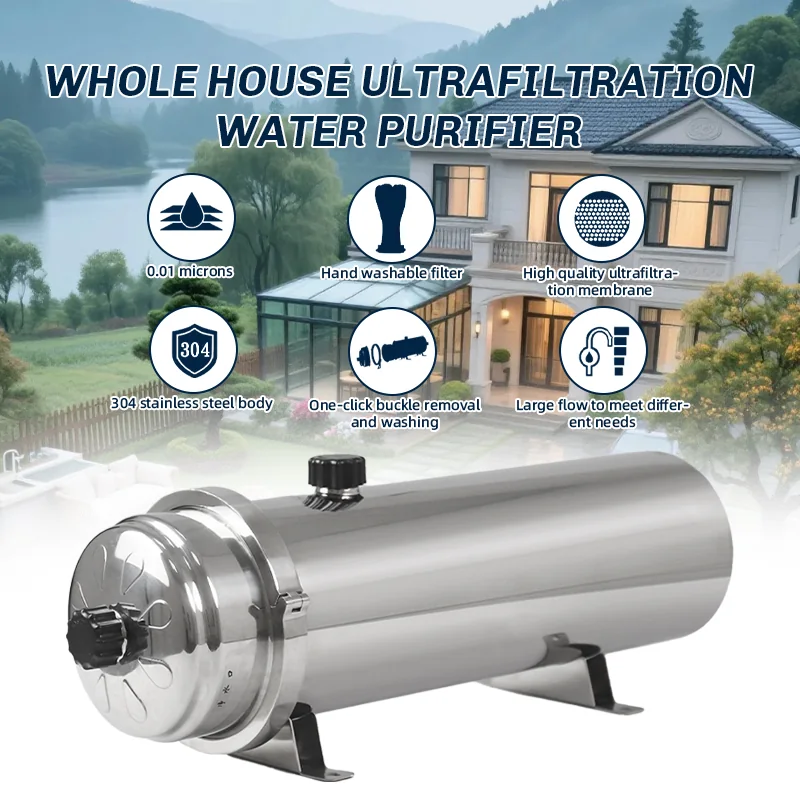
H-1 Whole-House UF Water Purifier
Horizontal whole-house ultrafiltration purifier in food-grade 304 stainless steel, with a uniform Φ168 mm cylinder and flow options from 3000 to 10000 L/h. PVDF or PVC membrane at 0.01 micron, no electricity required.
3,000-10,000 L/h · 304 stainless, CIP-tolerant
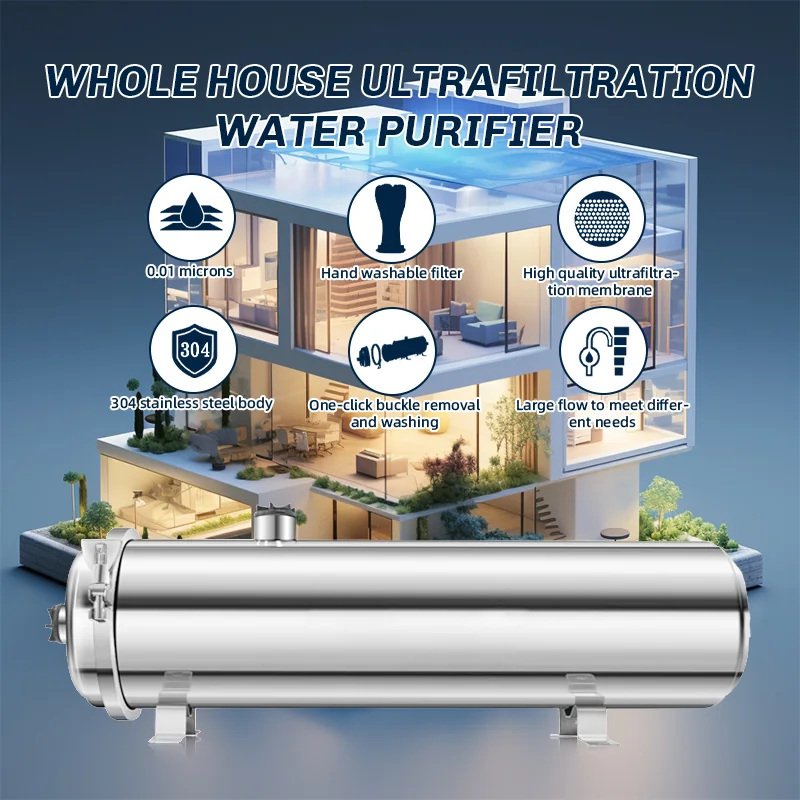
H-2 Whole-House / Commercial UF Water Purifier
Horizontal ultrafiltration purifier covering 1000 to 20000 L/h across three cylinder diameters (Φ102, Φ159, Φ203) for residential through commercial duty. Food-grade 304 stainless steel, PVDF or PVC membrane, 0.01 micron.
up to 20,000 L/h · Parallel banks
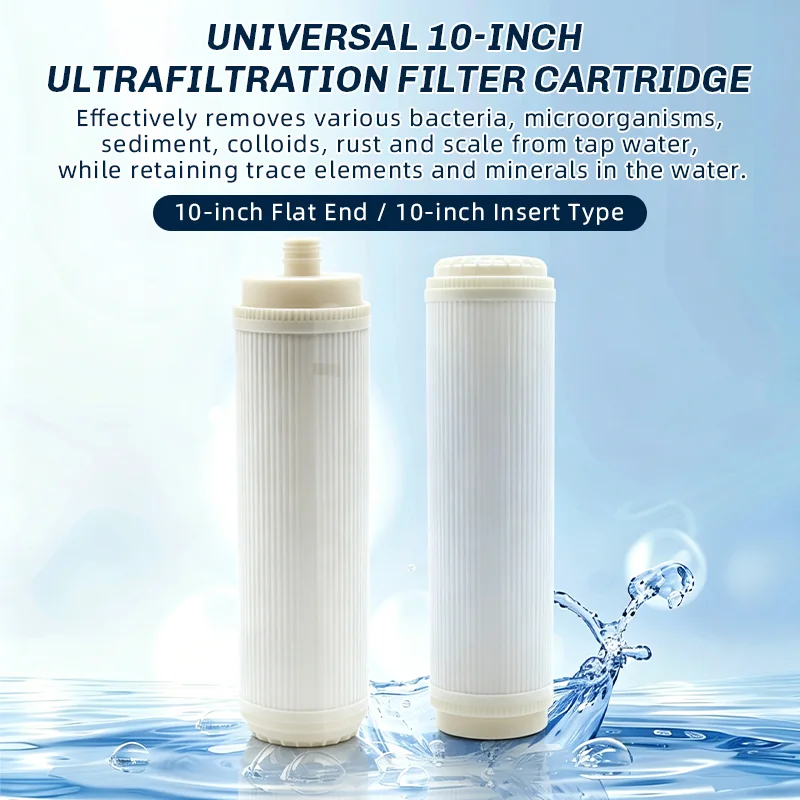
LX-A1 Universal 10-Inch UF Membrane Element
Universal 10-inch hollow fiber UF element, Φ70 × 254 mm, in PS, PVDF or PES at 0.01 micron. Fits standard 10-inch housings and replaces the cartridge in existing under-sink systems.
Standard housing · Final guard before filling
Frequently asked questions
Does it remove dissolved contaminants?
No. Dissolved salts, sugars and most dissolved organics pass through. If the specification limits conductivity or a specific ion, that is a reverse osmosis or ion exchange requirement.
Can the housing be cleaned in place?
Yes - 304 stainless tolerates standard CIP chemicals at normal concentrations. Agree the chemistry and temperature with us before the first cycle.
What record should we keep?
Differential pressure at commissioning, after each backwash, and at element change. That trend is the evidence that the barrier was working between changes.
Work out the numbers
Send the stream list, flow rates and your audit requirement - we will specify housings and the record-keeping points.