
Ultrafiltration for Schools, Campuses and Student Housing
Campuses combine high daytime demand with long idle periods, which is exactly the pattern that lets sediment settle and biofilm form in dead legs. A central 0.01 micron barrier plus point-of-use filtration at the drinking fountains keeps both ends of that problem under control without a maintenance visit to every tap.
A school is judged by parents on things they can see: whether the water fountain runs clear, whether the canteen ice looks clean. Behind that is a building services problem - intermittent demand, seasonal shutdowns, and pipework that was sized for a different era.
One central unit or many point-of-use units?
Central for the building supply, point-of-use for drinking fountains on long runs. A central unit handles the sediment load and protects canteen equipment; a small unit at the fountain removes the taste of chlorine that stops children drinking water at all.
What happens after a long holiday shutdown?
Flush the building first, then bring the filter online - the first flush carries the sediment and stagnation products, and you do not want that load on a fresh element. A bypass spool makes that sequence a five-minute task for the caretaker.
How is capacity set when the building is empty half the year?
Size for term-time peak, not annual average. H-7 at 2,000 to 4,500 L/h covers most school buildings; boarding houses with showers and laundry push toward the upper grade or an H-2 module.
Typical configuration
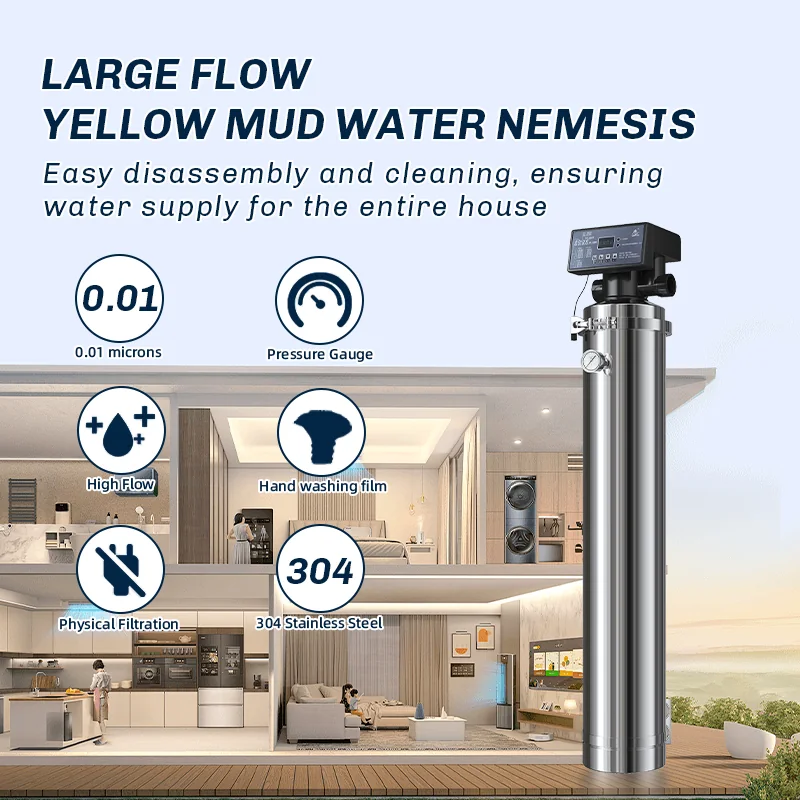
H-7 Central UF Water Purifier
Central whole-house ultrafiltration purifier in food-grade 304 stainless steel, with 2000 / 3500 / 4500 L/h options and matching Φ114 filter cores. 0.01 micron hollow fiber membrane, pressure-proof housing.
2,000 / 3,500 / 4,500 L/h · Washable, no power at membrane
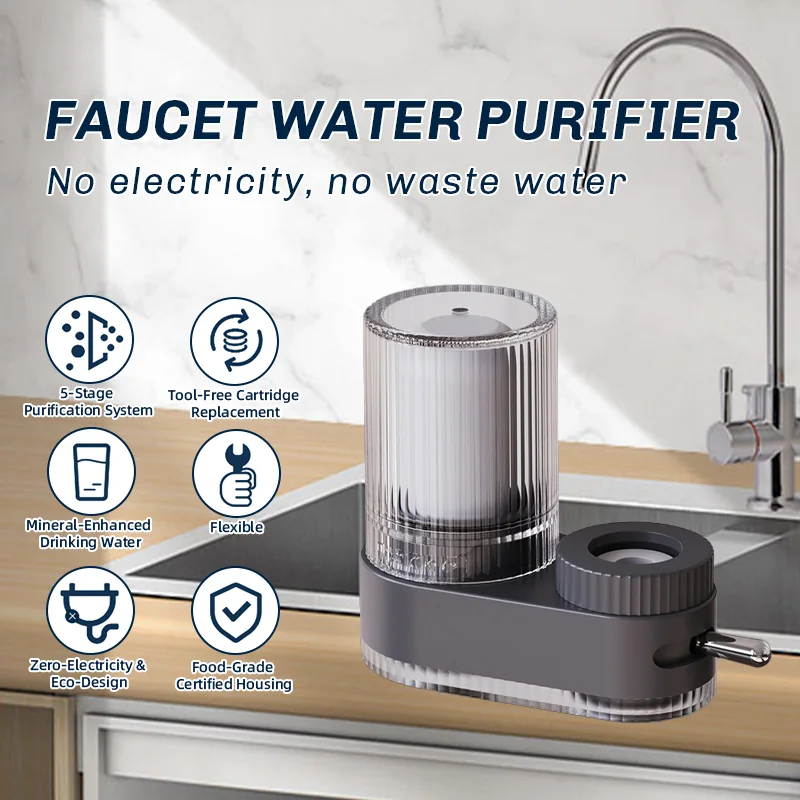
C-B2 Faucet-Mounted UF Water Purifier
Compact faucet-mounted purifier with a 304 stainless steel base and transparent housing. Cartridge options cover UF, carbon block, UF + CTO and ceramic composite, all at 0.01 micron and 1.5–2.0 L/min.
1.5-2.0 L/min · Chlorine and particle removal at the point
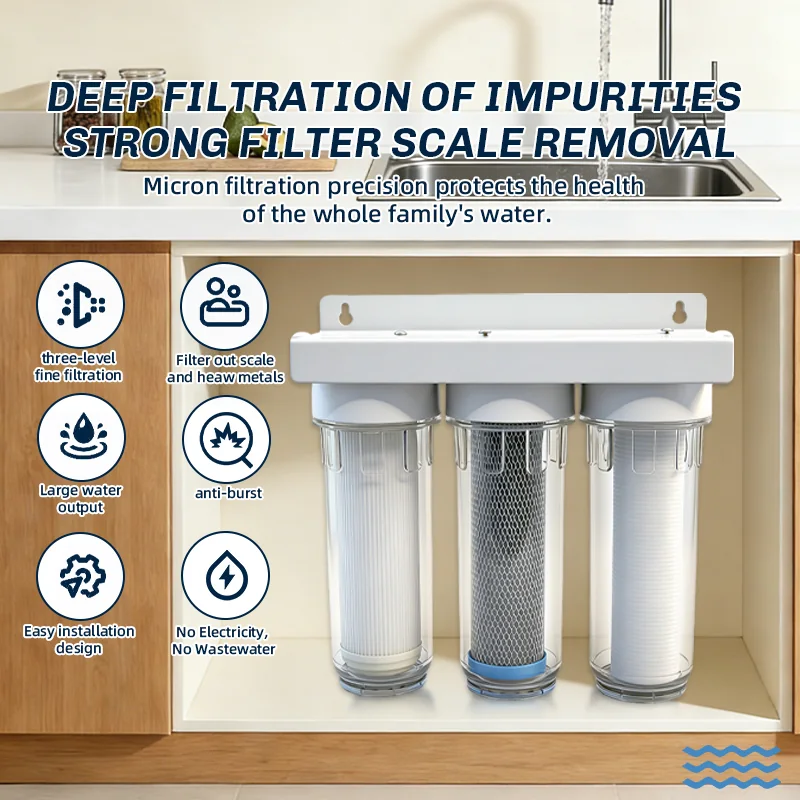
ZH-B 3-Stage Transparent Under-Sink UF System
Three-stage under-sink system with transparent reinforced housings: PP cotton, carbon block and a hollow fiber UF membrane at 350 L/h. The clear housing lets an end user see cartridge condition without opening the unit.
350 L/h · Under-counter install
Frequently asked questions
Is the water safe to drink after ultrafiltration alone?
Ultrafiltration removes particles, turbidity and bacteria-sized contaminants, but a municipally treated supply that already meets potable standards is what makes the water safe. Where the supply is not potable, disinfection and testing are required in addition.
Who maintains it?
Backwash is automatic on the central unit; element replacement is periodic and takes minutes with the bypass open. No specialist contractor is needed for routine work.
Can we start with one building and expand?
Yes. Modules can be added in parallel as buildings come online, which is cheaper than replacing an undersized unit later.
Work out the numbers
Tell us the building count, student numbers and water source - we will propose a phased installation.